

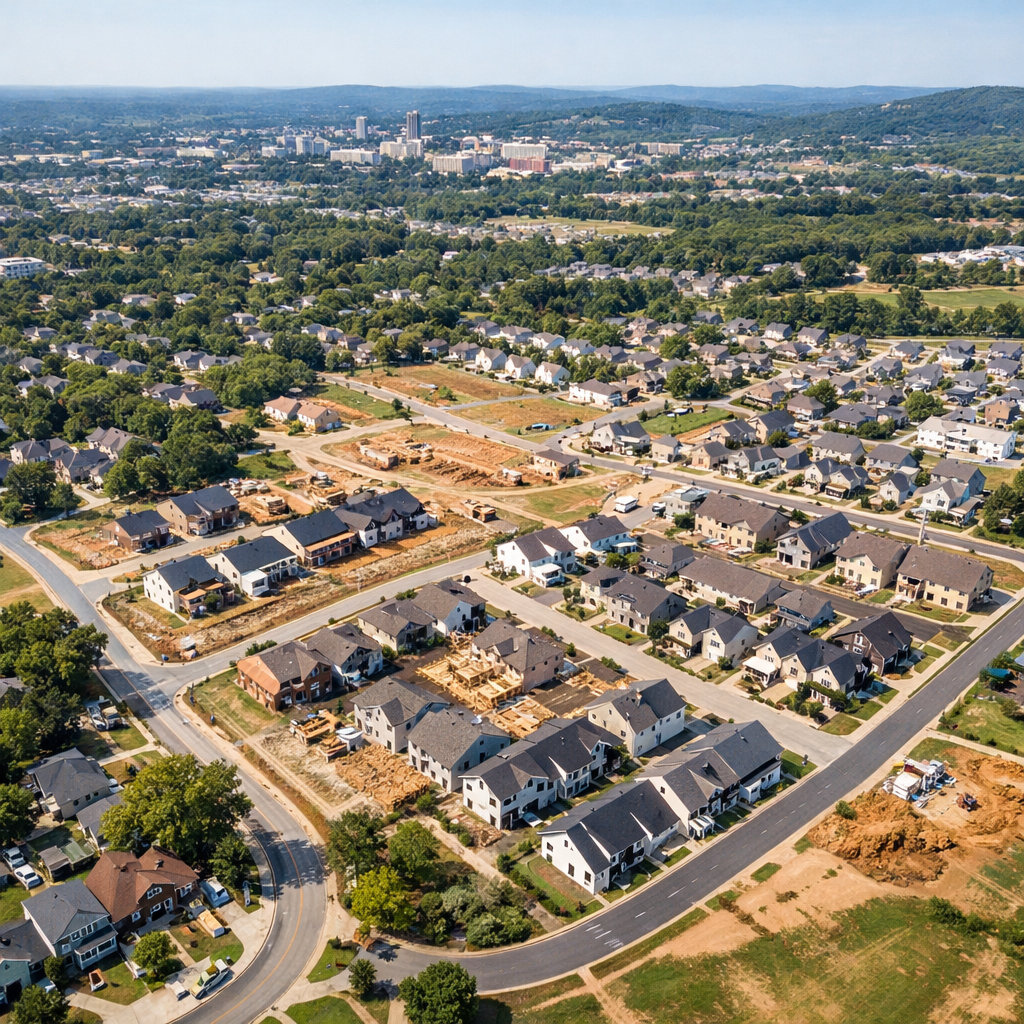
Fayetteville, Arkansas, is experiencing significant growth, attracting new residents and businesses. This expansion brings challenges, particularly in housing availability and affordability.
Rising Demand and Housing Shortages
With a population increase of approximately 4,000 people annually, the city’s housing stock has struggled to keep pace. This imbalance has led to low vacancy rates and escalating housing costs. To accommodate this growth, more than 1,000 additional housing units per year are needed. [Source]
City Initiatives to Address Housing Needs
In response, Fayetteville has implemented several strategies:
- Long-Range Planning: The city is focusing on housing through comprehensive plans, aiming to guide sustainable development.
- Rezoning Strategies: Prioritizing infill development to maximize existing infrastructure and reduce urban sprawl.
- Infrastructure Investment: Enhancing city services to support new housing developments.
- Collaborations: Partnering with non-profit organizations to provide affordable housing solutions. [Source]
Community Concerns and Responses
Residents have expressed concerns about the impact of rapid development on the city’s character and affordability. In her State of the City Address, Mayor Molly Rawn emphasized the importance of aligning growth with livability, stating that updates to student housing development approaches aim to ensure that full-time residents are not displaced. [Source]
Looking Ahead
As Fayetteville continues to grow, balancing development with affordability and community needs remains a priority. Ongoing efforts and community engagement are essential to ensure that the city remains a vibrant and inclusive place for all residents.