

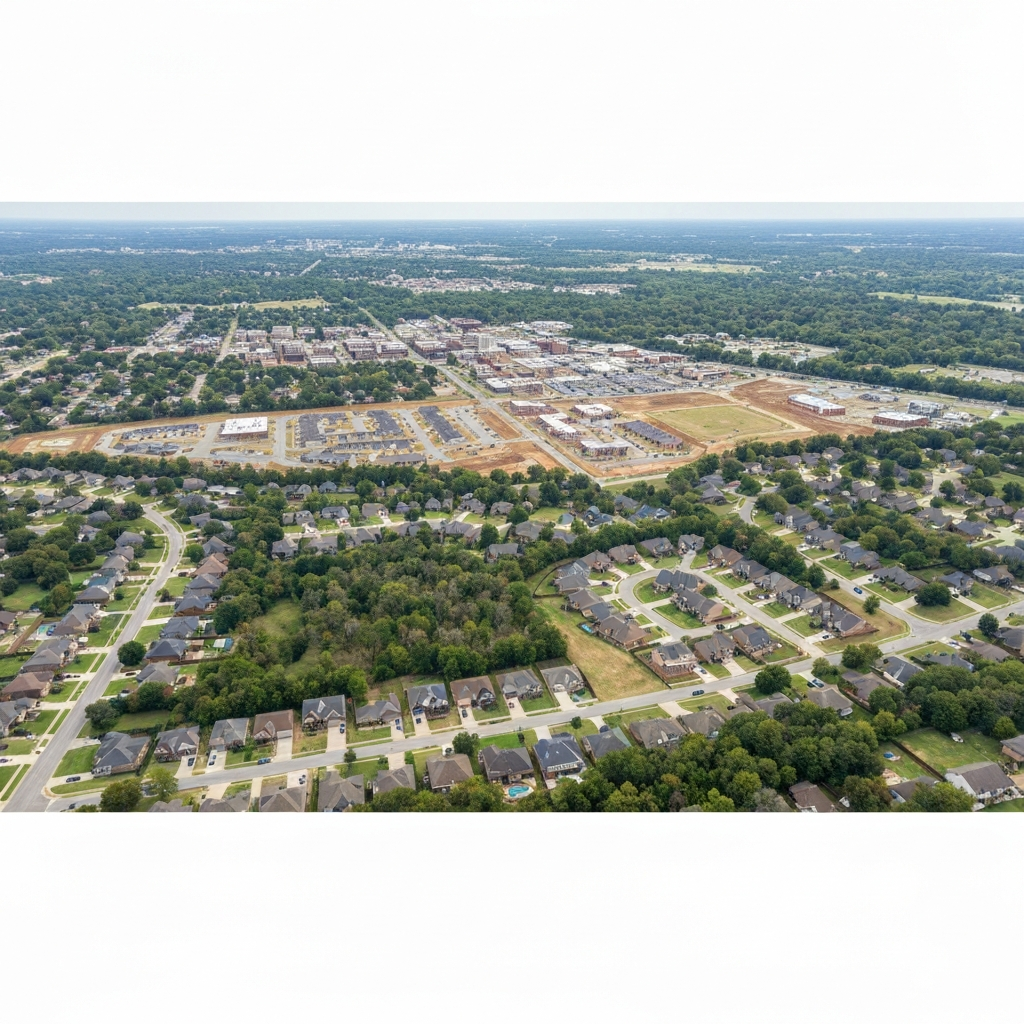
Fayetteville, Arkansas, continues to experience significant growth, influencing various facets of its housing market. This article provides an overview of current market trends, rental dynamics, and notable developments shaping the city’s real estate landscape.
Market Trends
As of March 2026, the average home value in Fayetteville stands at $377,910, reflecting a 4.1% increase over the past year. The median sale price is $360,000, with a median list price of $400,633. The market has seen a rise in inventory, with 373 homes available for sale and 113 new listings as of March 31, 2026. This increase in supply offers potential buyers more options and may influence pricing dynamics in the coming months. Source
Rental Market
The rental market in Fayetteville remains competitive. The average rent is $1,711, which is below the national average of $1,910. Over the past year, rents have increased by 2.6%, indicating steady demand for rental properties. This trend underscores the need for continued development to accommodate the growing population. Source
New Developments
Several significant developments are underway to address housing needs and enhance community amenities:
Axis on Futrall
Scheduled for completion in summer 2026, Axis on Futrall is a luxury student housing development near the University of Arkansas. The 658-bed community will offer fully furnished apartments ranging from studios to four-bedroom layouts, along with amenities such as a fitness center, resort-style pool, and study rooms. Source
Drake Farms
Drake Farms is a mixed-use development designed to foster community connection. The project plans to include 2,400 homes and 1.3 million square feet of healthcare, medical, and commercial space. This development aims to place residents within walking distance of essential services and employment opportunities. Source
Verve Fayetteville
Set to open in August 2027, Verve Fayetteville is a $97 million student housing project located at 707 W. Treadwell St. The development will feature 272 units across 532,300 square feet, addressing the housing needs of the growing student population at the University of Arkansas. Source
Community Initiatives
To address housing affordability and availability, the City of Fayetteville is implementing long-range plans focused on housing, recommending rezoning strategies to prioritize infill, investing in infrastructure, and collaborating with non-profit organizations. These efforts aim to improve access to housing for current and future residents. Source
In conclusion, Fayetteville’s housing market is characterized by rising home values, a competitive rental landscape, and proactive development projects. These factors collectively contribute to the city’s dynamic real estate environment, offering opportunities and challenges for residents and investors alike.